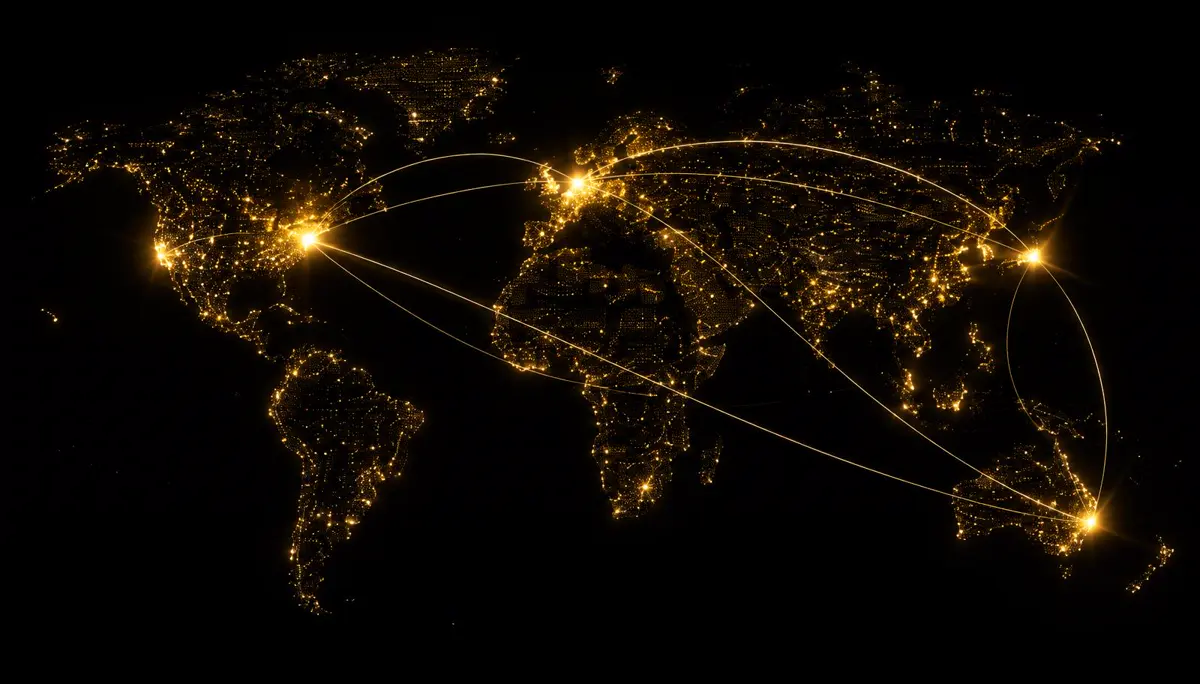
The forex market has no single exchange. Instead, trading follows the sun from one financial centre to the next, which is why it is open 24 hours a day from Monday morning in Asia-Pacific to Friday evening in New York.
The four main sessions
- Sydney opens the trading week and is often the quietest session.
- Tokyo brings activity in yen pairs and Asia-Pacific currencies.
- London is typically the busiest session, with heavy volume across most pairs.
- New York adds US data releases and overlaps with London for several hours.
Exact opening times shift with daylight-saving changes. Our forex market hours tool shows which sessions are open right now in your own time zone.

Why session overlaps matter
When two major centres are open at the same time — especially London and New York — more participants are active. Liquidity is usually higher and spreads on major pairs can be tighter. Quieter periods can see wider spreads and sudden moves on thin volume.
Weekends and holidays
Forex markets close at the weekend, so prices can open at a different level on Monday than they closed on Friday — known as a gap. Public holidays in a major centre can also reduce activity in the related currencies.
Knowing which session you trade in helps set expectations for spreads, volatility and the news that is likely to move prices.
This article is general information and education, not investment advice. CFDs are complex instruments and carry a high risk of losing money rapidly due to leverage.